Stewardship and conservation
This is a Historic-Cultural Monument and a wildlife corridor as well as a ranch. It is operated accordingly.
A working ranch has a real environmental footprint: water, waste, dust, and traffic. Managing those honestly is part of earning the right to operate on public parkland next to protected open space.
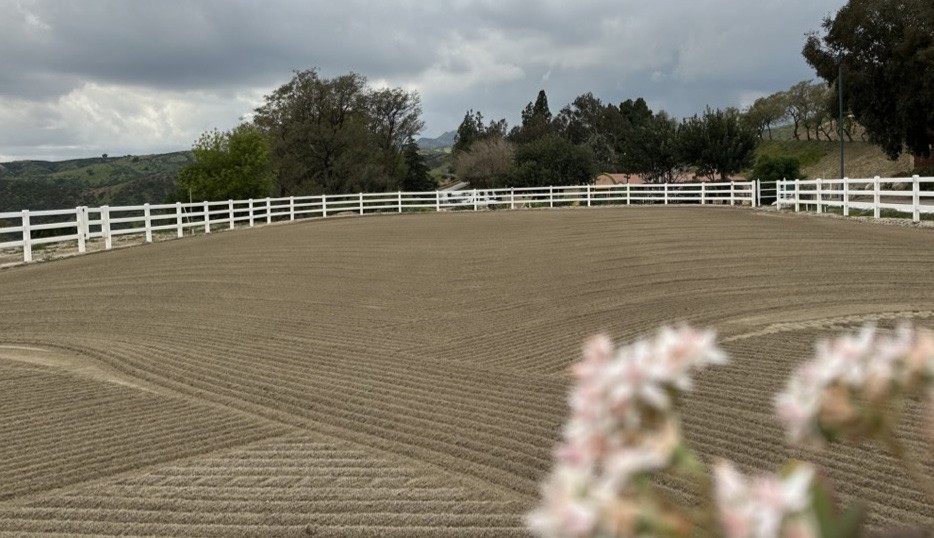
Manure is composted and removed on a scheduled cycle. Water use is metered, with automatic shut-offs, repaired lines, and drought-appropriate landscaping outside the horse areas. Grading and footing management control both dust and erosion during winter rain.
Native vegetation at the site edges and the rock formations themselves are left alone. Lighting is shielded and directed downward to protect the night sky and the wildlife corridor that runs toward Rocky Peak.
- Scheduled manure removal and composting
- Metered water use with leak repair and automatic shut-offs
- Dust control through footing management and grading
- Erosion and stormwater control for winter rain
- Drought-appropriate planting outside horse areas
- Shielded, downward-directed lighting
- Protection of native vegetation and rock formations
- Waste, fuel, and chemical storage per City requirements
“The rocks were here first. Everything we build is temporary by comparison, and should behave that way.”Stewardship principle